The Sphincter & Stomach — Valve 41 & Water Balance Tank
Water Inlet Electromagnetic Solenoid Valve (Valve 41 / V41) and its matching Primary Air Separation / Water Balance Tank.
In our medical analogy, if the pressure regulator is the "baroreceptor," then Valve 41 acts like a sphincter that guards the entrance to the stomach, and the Water Balance Tank is the stomach itself—a reservoir that holds, vents gases, and buffers the initial fluid volume.
1. Anatomy & Physiology The Components & Normal Function
Baseline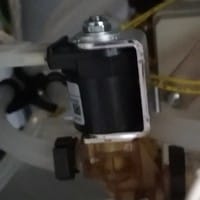
The Components:
- Valve 41 (V41): A 24V DC normally-closed electromagnetic plunger valve situated directly after the water pressure regulator.
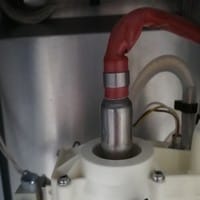
- Water Balance Tank: An atmospheric, transparent plastic reservoir tank equipped with electronic float switches or level sensor pins (Low, Medium, High).
- When the machine demands water (e.g., during priming, dialysis flow, or rinsing), the Low-Level Controller (LLC) sends a 24V electrical impulse to the coil of V41. The resulting magnetic field lifts an internal steel plunger off a rubber seat, allowing regulated RO water to flood into the tank.
- The Water Balance Tank serves as an atmospheric break system. It detaches the machine's internal closed hydraulics from the pressurized external plumbing loop.
- As fluid enters the tank, ambient air vents out of the top overflow chimney. The electronic level sensors constantly monitor the fluid height. When the tank hits its "High" fill threshold, the LLC cuts power to V41, snapping it shut to halt the intake.
2. Pathophysiology What Causes Malfunction
EtiologyWhen this system breaks down, it manifests in two primary pathophysiological states:
-
State A: Ischemic / Electrical Failure of V41 (Solenoid Failure):
- Etiology: The copper wire inside the V41 magnetic coil overheats and breaks (open circuit), or shorts out over time. Alternatively, mineral scaling calcifies the internal steel plunger shaft.
- Mechanism: When the LLC commands the valve to open, the mechanical plunger remains paralyzed at the bottom of its housing. Water transit stops completely, and the machine "starves."
-
State B: Sensory Neuropathy / Float Failures (Tank Overfill or Dry Run):
- Etiology: Biofilm or crystalline chemical scale builds up on the level sensor pins inside the tank. Alternatively, a physical float switch gets physically snagged or cracked, taking on water and sinking.
- Mechanism: The machine loses its "proprioception" (it cannot tell how full its stomach is). If the sensor is stuck reporting "Low," V41 stays open endlessly, flooding the tank. If it is stuck reporting "High," V41 never opens, and the downstream pumps pull a dry vacuum.
A stuck-open V41 or a failed "High" level sensor can cause machine flooding, damaging internal electronics and creating a slip hazard on the clinic floor.
3. Signs & Symptoms The Machine's Presentation
Clinical PictureYour orientation staff should look for these distinct presentations on the clinic floor:
- Symptom 1 (The Overflow): Water is actively rushing out of the clear silicone overflow tubes at the rear-bottom of the chassis, dripping into the clinic drain tray. This means V41 is stuck open mechanically or the level sensor failed to register "High."
- Symptom 2 (The Acoustic): A loud, rhythmic clicking or rapid chattering sound coming from the electronic card cage. This indicates the LLC is rapidly toggling V41 on and off because a level sensor is rapidly fluctuating at a faulty boundary line.
-
Symptom 3 (The Software Alarm): The Dialog+ triggers specific alarms:
- "Water Inlet Failure" during the T1 Pre-test.
- "Level Sensor Failure" or an LLC code indicating a time-out while trying to fill the air separation tank.


4. Differential Diagnosis Ruling out Mimics
Rule OutIf the Water Tank is failing to fill or is over-flooding, your staff must rule out the following mimics before replacing parts:
- The Inlet Regulator: Is there actually 1.0 bar of water arriving at V41? (If the regulator we studied in the last lesson is blocked, V41 will click open, but no water will enter).
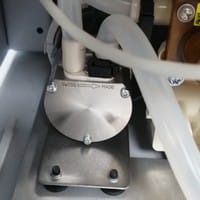
- The Degassing Pump (AEP): If the tank fills but the downstream degassing pump isn't pulling water out of the bottom of the tank fast enough, the tank will trigger an overfill error even though V41 and the level sensors are working perfectly.
5. Management Clinical Engineering Intervention
Treatment PlanDiagnostic Measures (The Physical Exam)
- Turn the machine off, flip the S1 Service Switch to Position 2 (TSM Mode), and boot up.
- Navigate to TSM Menu 1: Inputs/Outputs → Submenu 1.09 (Level Sensors / Valves).
- Observe the live digital status bits (0 or 1) for the Tank Level Sensors while manually pouring a small amount of water into the tank or manually triggering the float.
- Locate V41 in the software menu and toggle it manually to ON. Listen for a distinct, sharp mechanical "Clack."
- Measure across the V41 wire harness plug with a digital multimeter. When toggled ON, it must read 24V DC. If 24V is present but the valve does not click, the coil or plunger is dead.


Technical Management (The "Treatment Plan")
- Unscrew the top retaining nut.
- Slide off the electrical coil.
- Unbolt the valve body.
- Extract the plunger and internal spring.
- Clean the rubber sealing tip, remove any trapped grit.
- Re-lubricate with medical-grade silicone grease (if specified by B. Braun).
- Reassemble.